
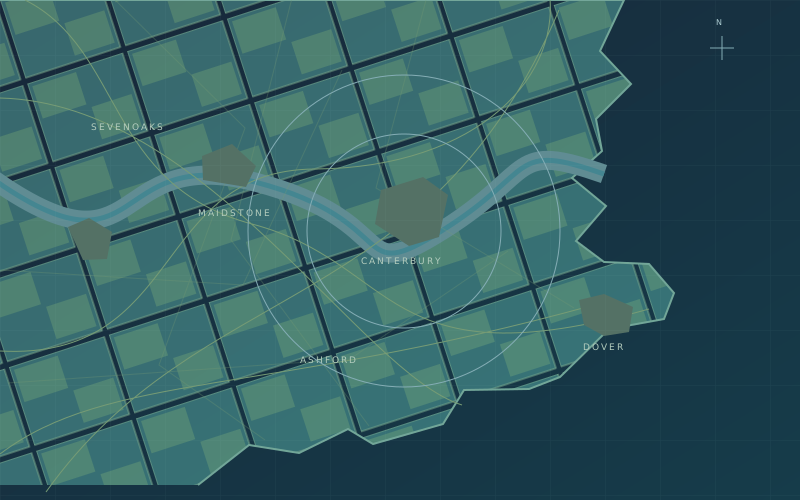
A portfolio view can reveal where to focus attention. A brief helps people agree what that focus means. The transition is not simply an export button: it requires selecting the relevant evidence, explaining its limitations, and connecting the result to the decision that prompted the work.
Keep the scope visible
Describe the portfolio, period, hazards, and purpose. Explain whether the analysis uses observations, modelled information, or synthetic data for an illustration. State what was excluded and which parts of the inventory remain uncertain. A reader receiving the brief outside the original meeting should still understand what the result can support.
Explain the priorities
Show how review priorities were selected and why they may differ from a simple ranking. Operational criticality, missing information, and uncertainty can justify reviewing a location that has a lower score. Where a threshold was used, include its definition and sensitivity. Keep any headline metric connected to the underlying locations and assumptions.
Make the action proportionate
An initial brief may recommend validating records or obtaining site-specific evidence rather than choosing an intervention. Name the owner, the question to investigate, and the next review point. Avoid presenting suggested actions as proven outcomes. The brief succeeds when people can explain the reasoning and use it to organise a better next conversation.
Three things to take away.
- Carry scope and limitations into the exported brief.
- Explain priorities instead of only reproducing rankings.
- Assign evidence-gathering actions with owners and review points.
Further reading
Explore the underlying topics through these reference sources.