
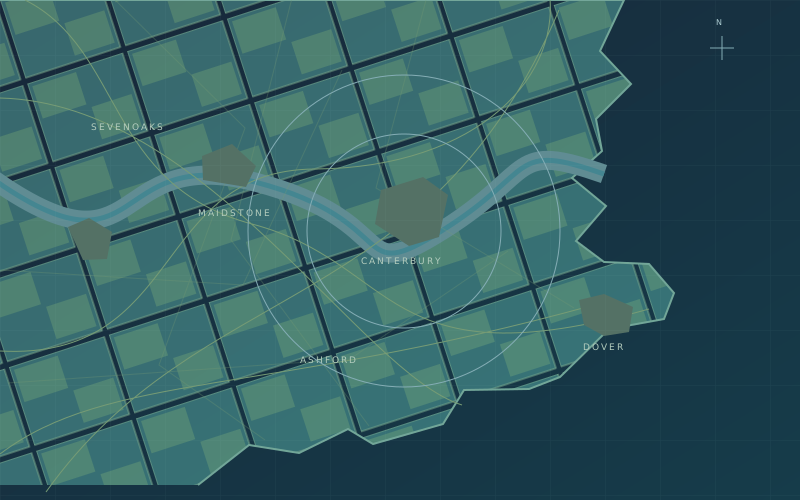
Portfolio screening helps an organisation organise attention across many places. A site-level review asks more detailed questions about a particular place and its operations. Treating these stages as interchangeable can turn a useful screening result into an overconfident conclusion.
Use the shortlist as a starting point
Explain why a site was selected, which evidence supported that choice, and how sensitive the result is to assumptions. Include reasons to investigate apparently lower-ranked sites, such as operational criticality or gaps in data. A single ranking should not determine every priority when the consequences of disruption differ across the portfolio.
Build the local picture
Review the relevant site boundaries, building characteristics, access, utilities, maintenance, and existing protective measures. Discuss previous events carefully: useful local experience does not establish every future condition. Bring in appropriate hazard evidence and qualified expertise. Record where the site team and the regional screening point towards different interpretations.
Decide what the next stage requires
The review may identify a need for further modelling, an engineering assessment, a continuity exercise, or better monitoring. Define the purpose and evidence required for that next stage rather than automatically commissioning every possible analysis. Keep a clear record of decisions, responsibilities, and the conditions that would prompt reconsideration.
Three things to take away.
- Screening prioritises questions; it does not finish an assessment.
- Include criticality and data gaps in review priorities.
- Agree an evidence-led next stage for each location.
Further reading
Explore the underlying topics through these reference sources.